As we are working on the theme of “Space & Scale”, we wanted to first actually understand how the impacts of climate change are felt both locally and globally, so we started by gathering pollutions information from around the world. We pulled together the informations we found on different platforms including air quality rankings, water pollution rankings, and most importantly emissions data and started mapping.
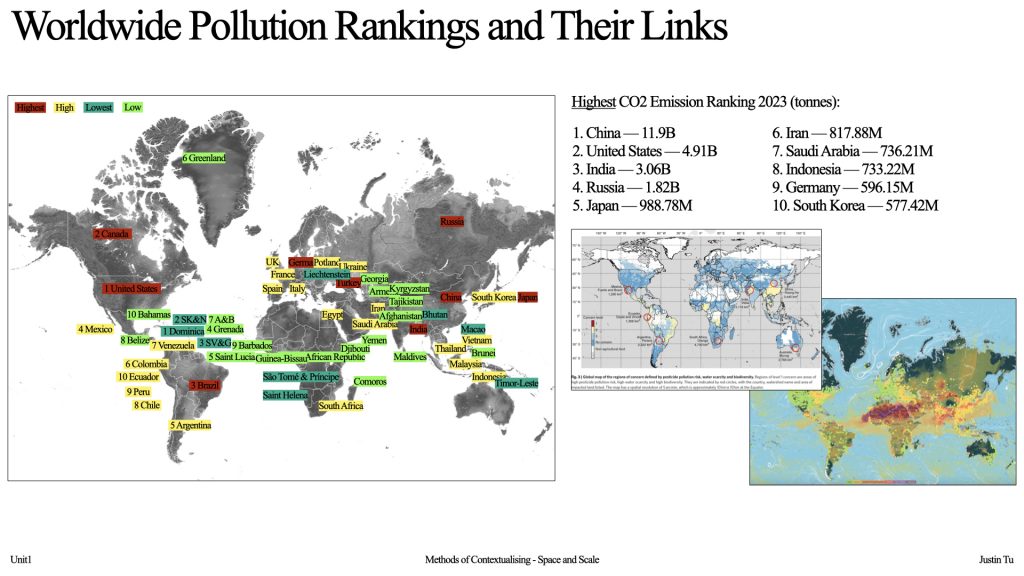
When you look at this you can tell countries that were historically colonisers tend to appear cleaner, while many formerly colonised regions show heavier pollution. It’s not a random distribution, and it raises questions about how those historical power structures still shape environmental conditions today.
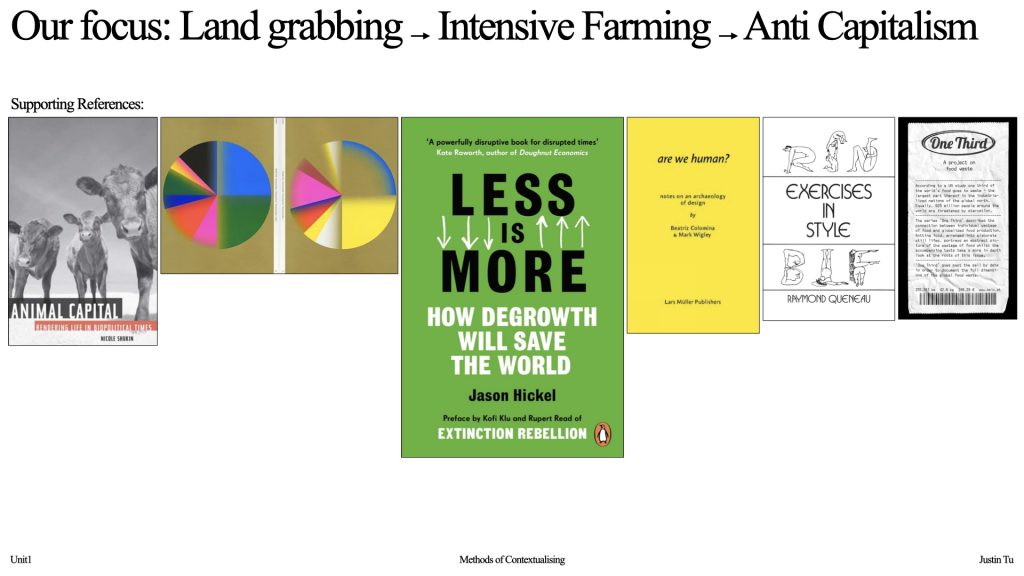
Our Primary Reference: Less is More
This text traces how Enlightenment thought established a hierarchy separating humans from nature, legitimizing extraction and colonial power. It reframed our view of intensive agriculture not as a policy flaw, but as part of a longer history linking land control, capitalism, and domination.
We then decided to focus on anti capitalism and intensive farming, exploring ways we can reduce overall waste and raise awareness about what we buy and eat. And this is where our project “know your bites” began, which explores the emissions of different foods and their environmental impact within UAL.
This led us to focus on the university canteen system. When we started researching about the food served across UAL canteens, we found out that they had already done such a great job — the system is quite sustainable and mindful of its environmental footprint. However, we noticed that very few students are aware of this, or of the environmental impact of the food they choose to eat.
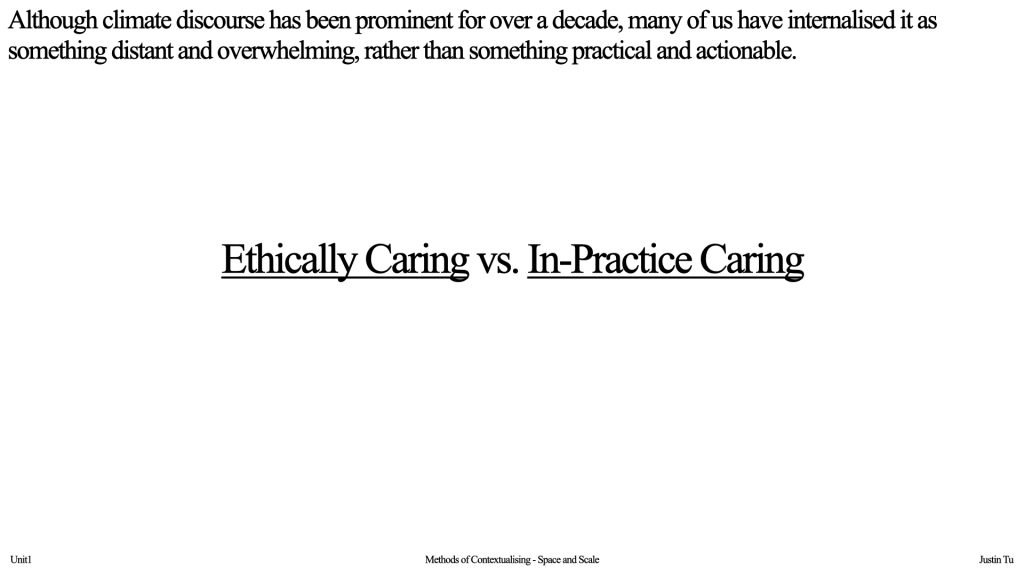
We identified two types of care when it comes to environmental issues: ethical caring and in-practice caring. Ethical caring describes students who care about the issue in principle but don’t actively engage in ways that create change. In-practice caring, on the other hand, refers to students who take action, they educate themselves, make conscious choices, and have a tangible impact.
But we need them both.
This insight led us to ask: how can we make sustainable action feel easy and accessible in everyday life? Specifically,
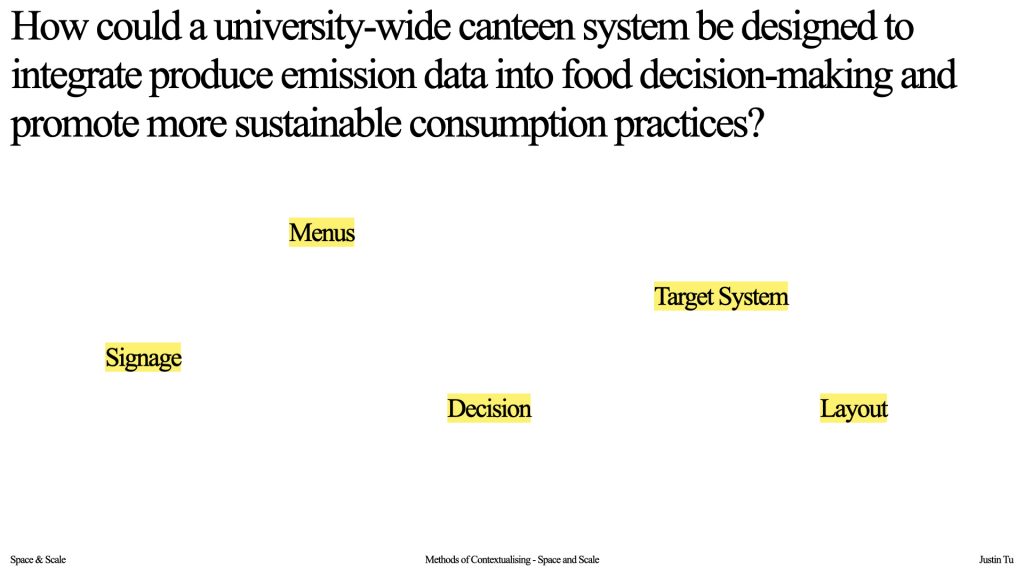
With that question in mind, we began developing a system that not only informs people about the impact of the food they eat, but also actively engages them, making sustainability something they can participate in, rather than just think about.
We estimated carbon footprint for each dish that we calculated. To calculate the emission of each dish we used the food carbon footprint calculator developed by « My emissions » a carbon reporting platform that works with brand to reduce their food carbon footprint. While calculating these data we put the different food into broader categories to create a system that would be easy to understand visually while still being impactful.
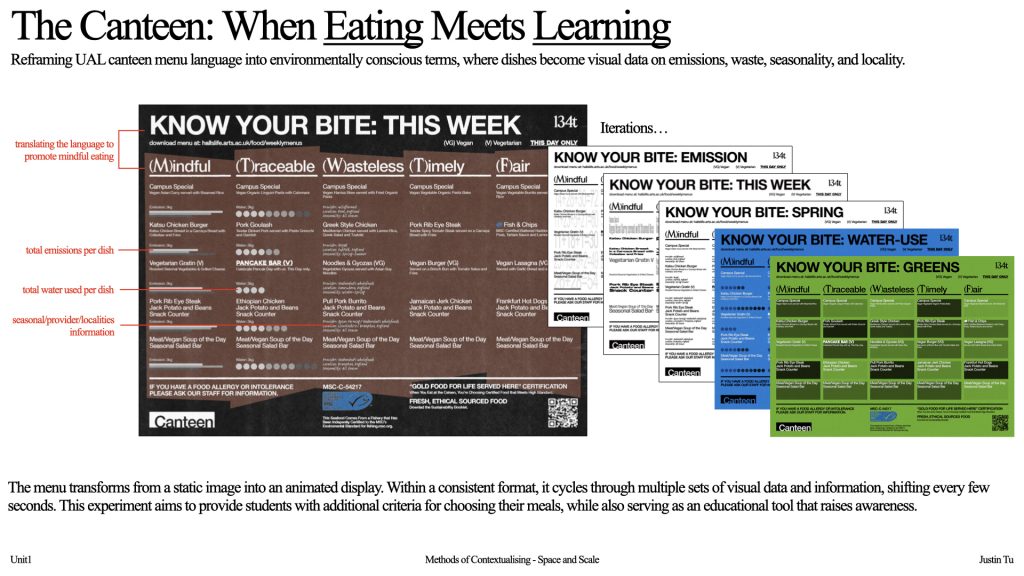
And to encourage students to move into in-practice caring, we wanted to make sustainable choices feel intuitive and approachable. We approached this by encouraging people to think about eating seasonally and buying locally.
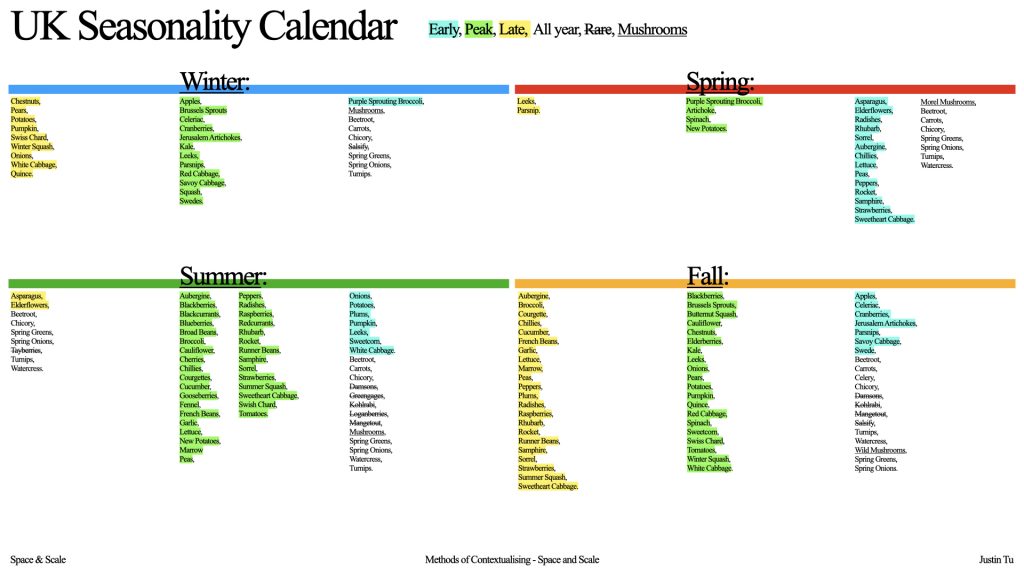
We began by mapping out UK produce across the year, organising it to show when items are early, peak, or late in their season.
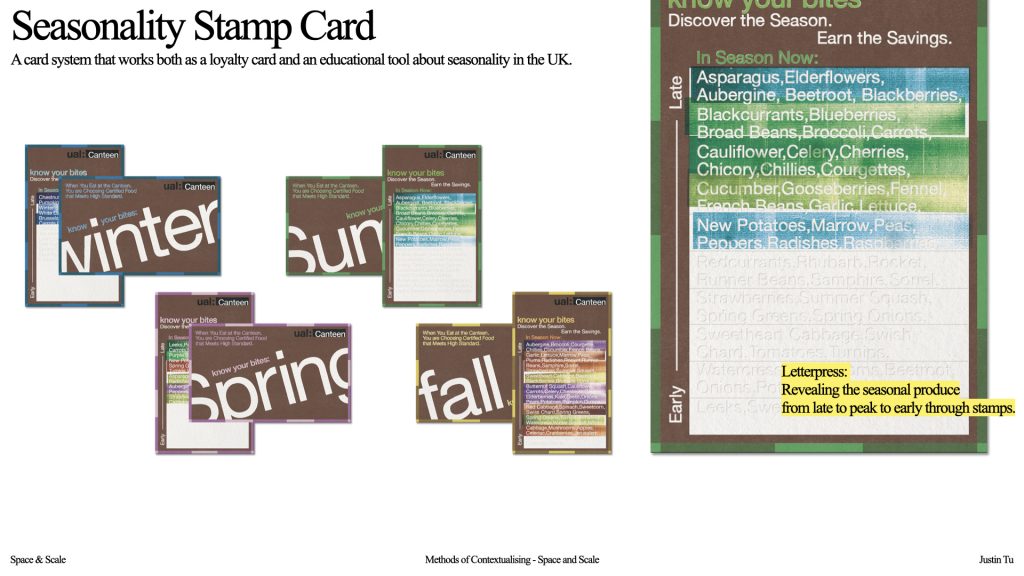
To make this information engaging rather than instructional, we introduced an element of playfulness through a card system that works both as a loyalty card and an educational tool about seasonality.
Each meal earns you a stamp, and after ten meals you receive a reward, along with access to the seasonal information hidden on the card. The card is valid for one season, after which you receive a new one that reflects the next cycle of produce.
The card contains information about seasonal produce which are embossed into the paper, in the order from late to early. The catch is that to read it, you have to reveal it with ink. And to get that ink, you need to eat in the canteen.
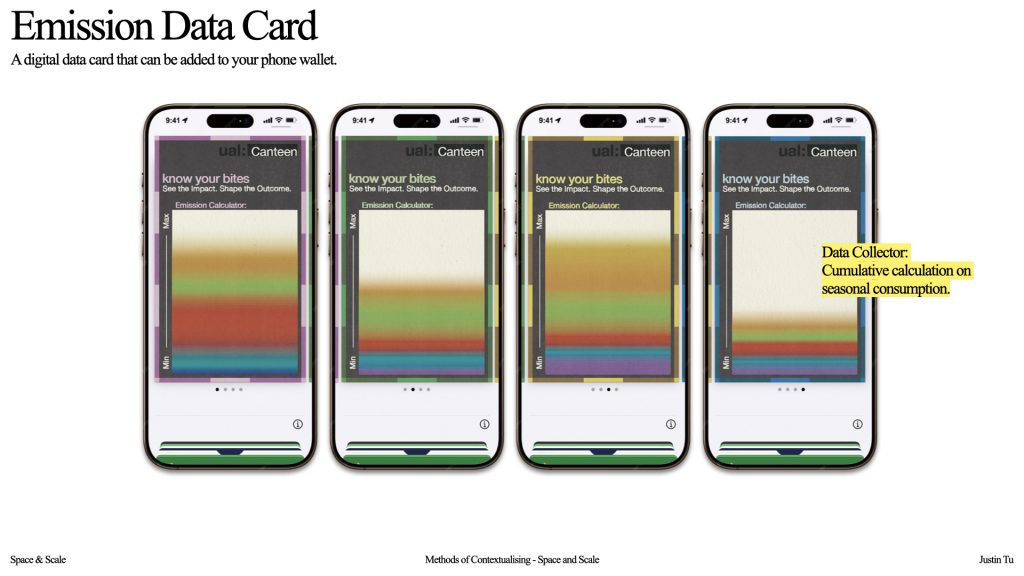
Building on this idea, we also designed a digital version of the card that can be added to your phone wallet. Each time you eat, you scan your meal, and its carbon footprint is added to a gradient bar. Each colour represents a different emissions category like our menu, turning it into a visual record of your personal food footprint, like a constant, gentle reminder of your impact.
With this system implemented across the canteen, we hope to support students in transitioning from ethical caring to in-practice caring, not just caring in principle but caring through everyday decisions. Ultimately, we hope this doesn’t just stay within the canteen. We want students to gain knowledge they can take home, share with others, and apply in their daily lives.
Leave a Reply