Week1:
Starting this brief I decided to drop the framing devices as it is quite limiting and in some ways disrupting to my exploration on the dialogic interaction between imagery(symbols).
So I changed the enquiry line to:
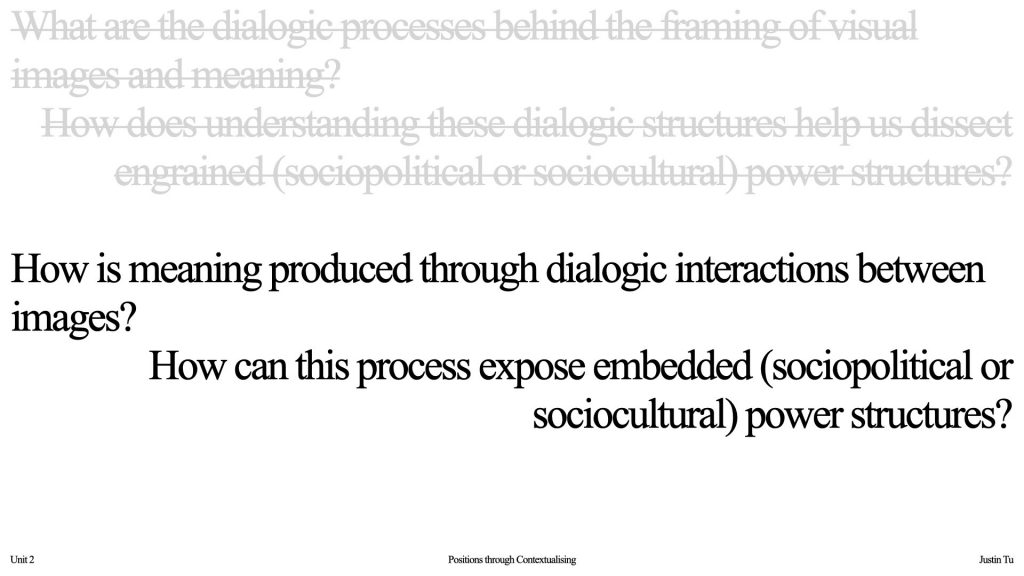
I am trying to explore graphic design as a system of “cognitive intervention” that exposes biased perception.
Although I have dropped the framing devices, these 3 from the previous set of iterations drew my attention.
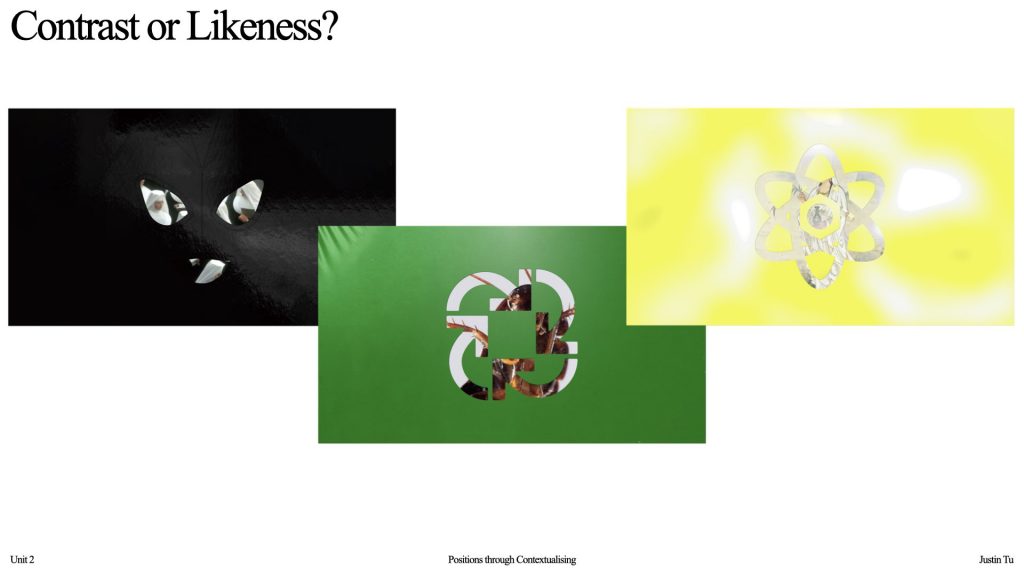
At the beginning of the project, I was experimenting quite intuitively — pairing different symbols with contrasting imagery to see how they interact. For example, placing something that feels clean or structured with something more nasty or chaotic, to create a kind of visual tension between what we usually think of as good and bad.
Take the cockroach, for example. My initial instinct was to frame it as something undesirable, something we want to eliminate. But actually, cockroaches are incredibly resilient. They’ve survived for millions of years, and now they’re even being studied for their potential role in breaking down waste, including plastic. So instead of being purely negative, they can also represent sustainability and adaptation.
That shift made me look again at the other pairings, like Guanyin and nuclear energy, or the nun and BDSM mask. At first glance, these feel like opposites, even contradictions. But the more I think about them, the more I feel they share a similar underlying energy.
They’re all tied to ideas of control, belief systems, discipline, and transformation, just expressed through very different cultural, temporal, or moral frameworks.
So what I’m interested in exploring now is how our cognitive lens categorizes things too quickly. We label things as sacred or dangerous, but those boundaries are often constructed. Underneath, there can be shared meanings that just manifest differently depending on context and time.
[test01] Shared Meaning: Energy
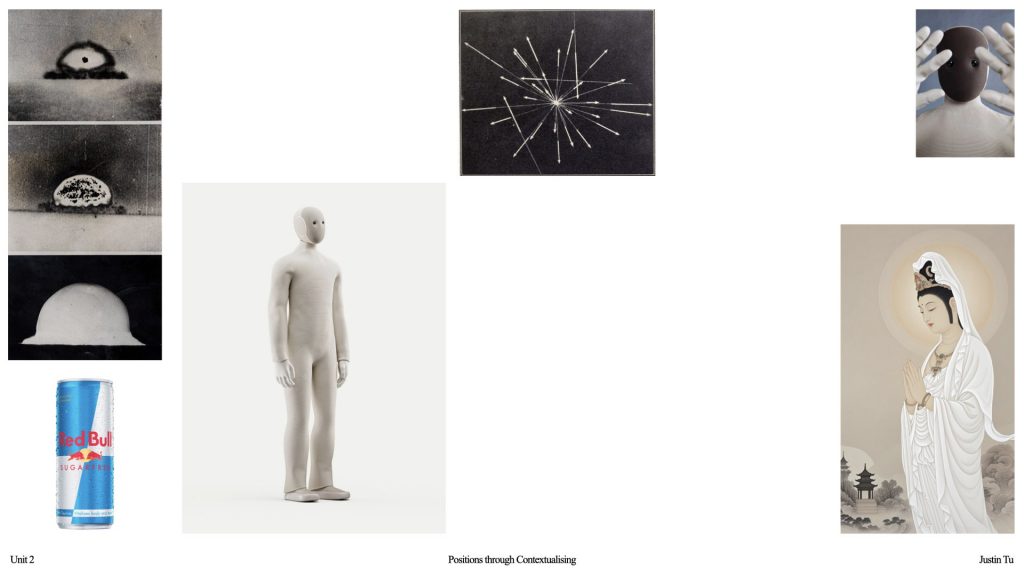
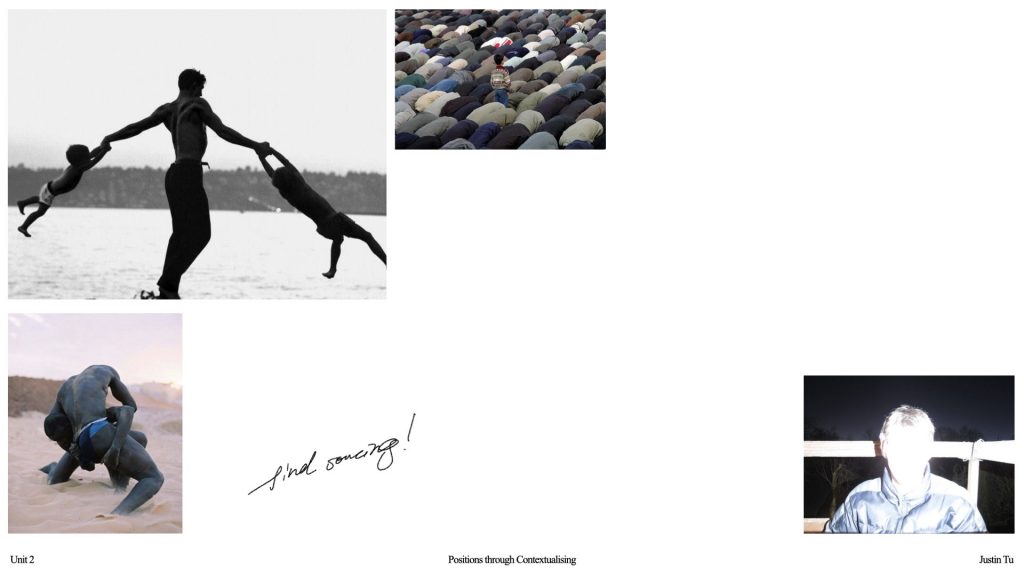
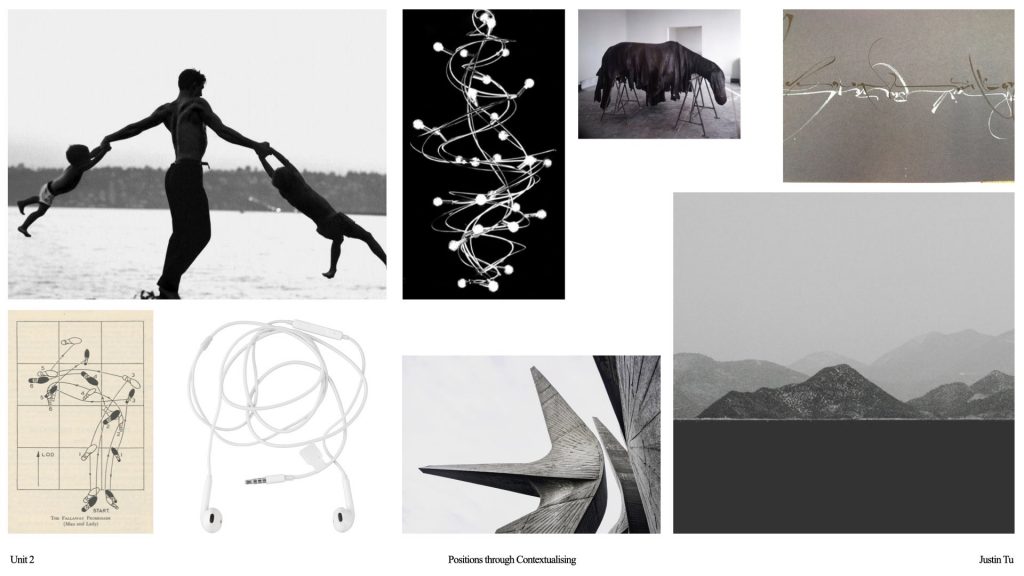
From [test01], I began thinking about alternative ways to connect imagery together, using Jacques d’Amboise Playing with His Children, Seattle, 1962 by John Dominis as a reference point.
In Parallel Encyclopedia (2007/2016), Batia Suter employs a method of visual sequencing based on rigorous formal resonances, linking disparate images across history and discipline by matching their shapes, surfaces, textures, and lines. She arranges these decontextualized elements to reveal unexpected structural homologies, moving away from thematic or narrative sorting to investigate how pure visual morphology can bridge entirely unrelated subjects.
[test02] Formal Resonances
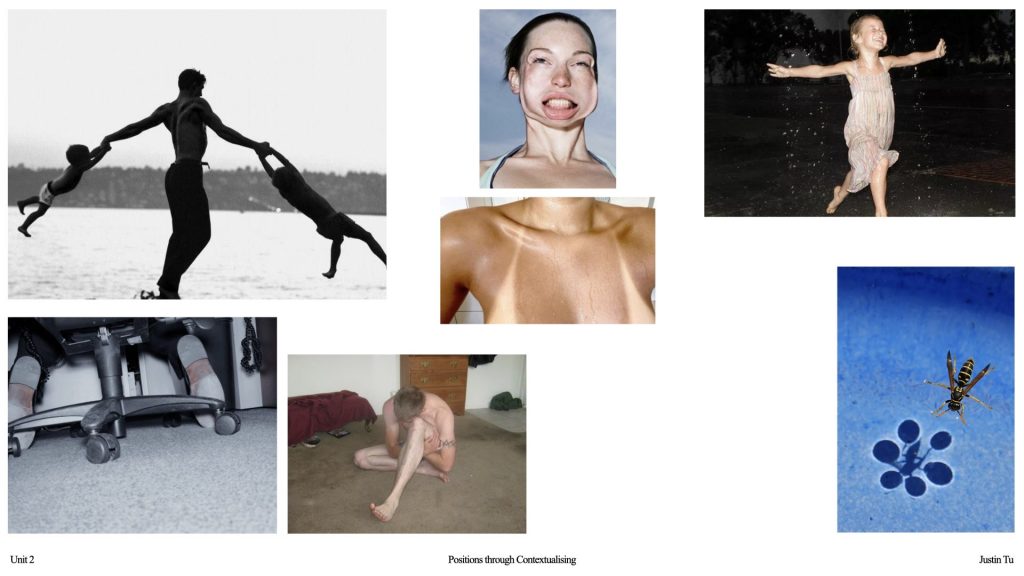
In On Patterns and Proxies (2018), Wendy Hui Kyong Chun examines how images function as proxies, stand-ins that represent complex or inaccessible realities. She argues that proxies both clarify and obscure meaning: they reduce uncertainty while simultaneously introducing new ambiguities.
Crucially, the same image can generate opposing interpretations, fostering both belief and skepticism depending on the viewer’s ideological position.
[test03] Proxies
Week2:
After experimenting with different ways of associating and combining imagery to create meaning, this week I’ve started refining my process into more intentional approaches.
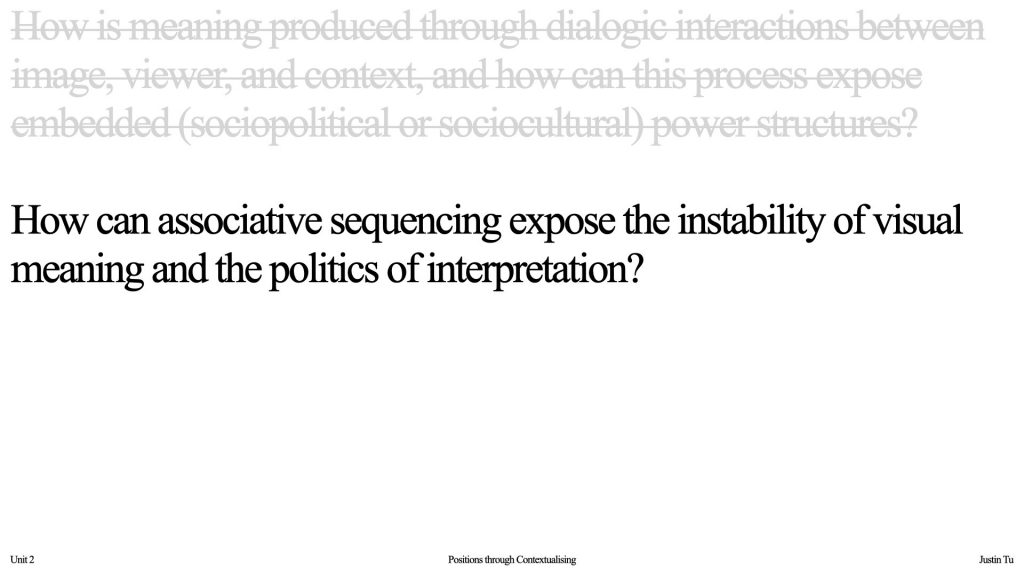
[test01] Theme: Father
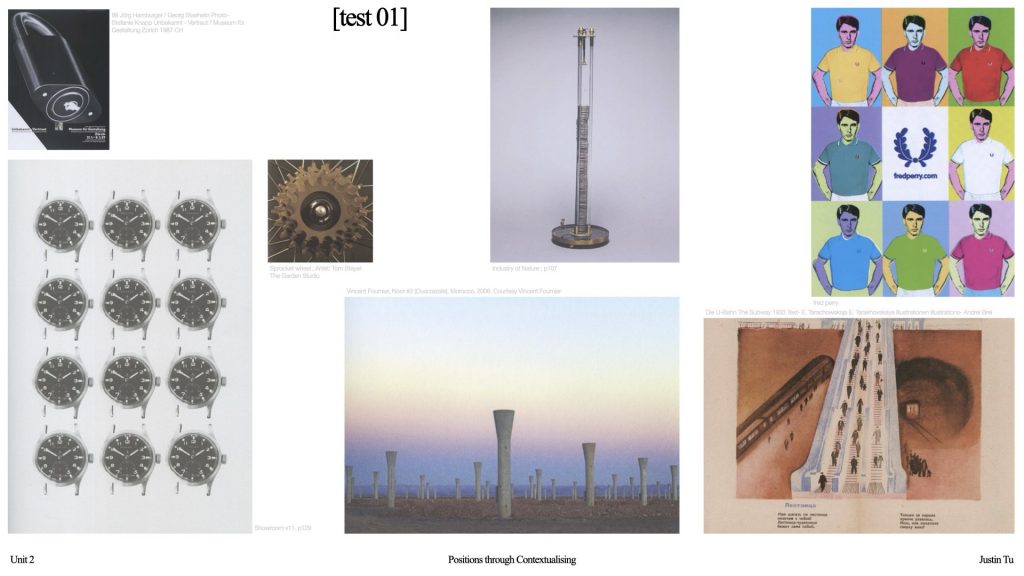
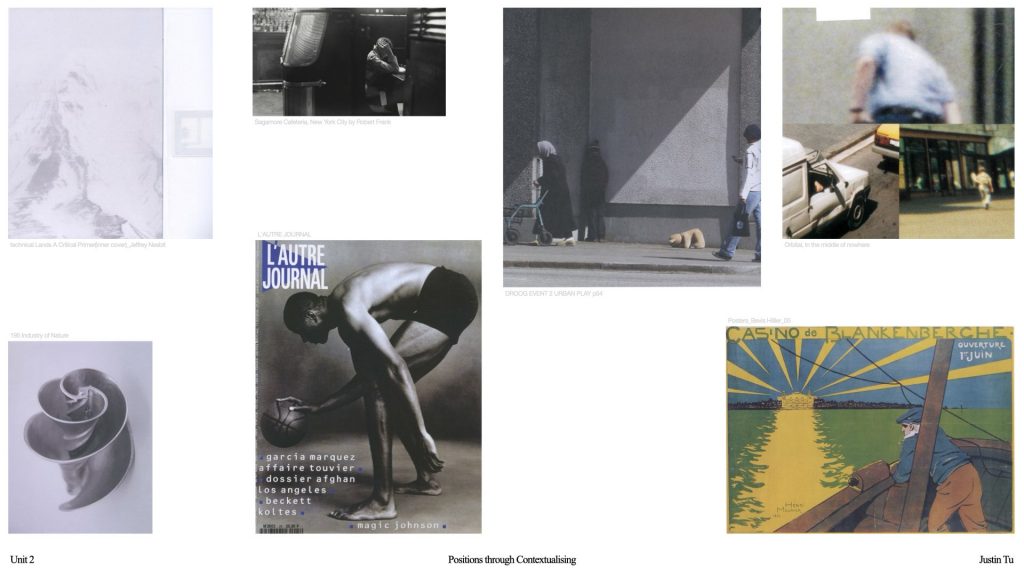
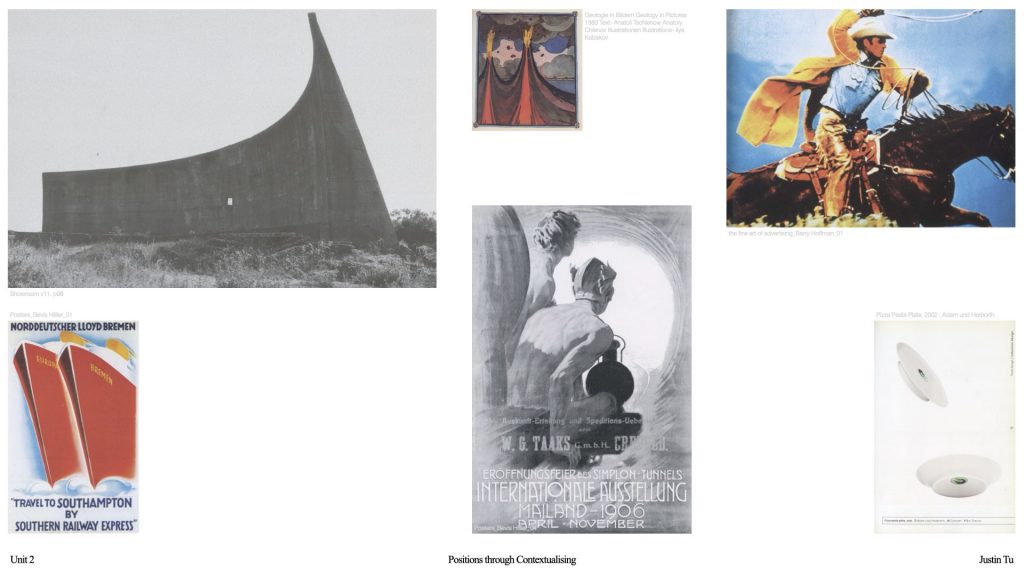
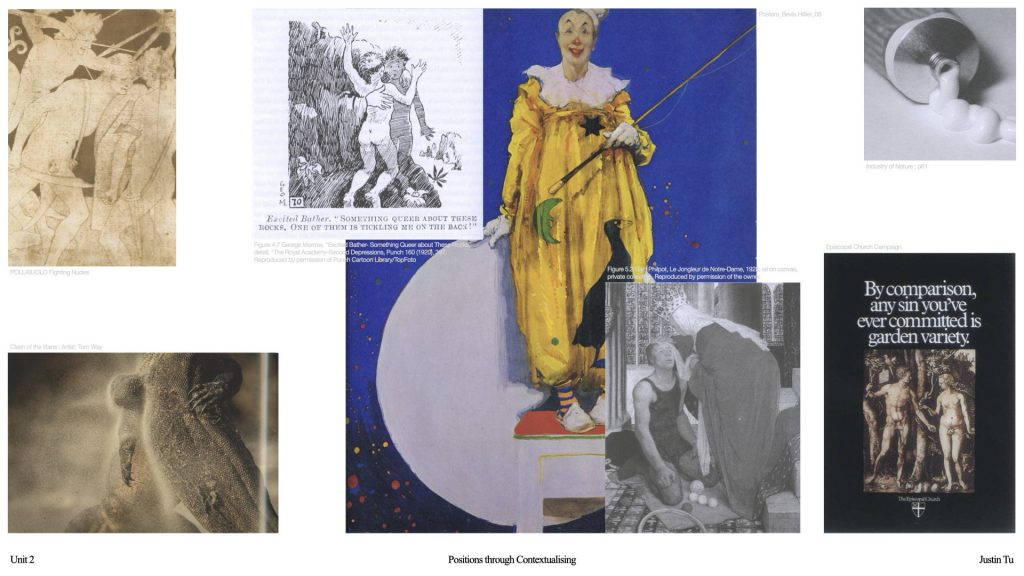
The first approach is working with a theme, and then intuitively selecting images from random books that somehow feel connected to that theme, whether visually, emotionally, or symbolically.
I decided on my theme based on a collage i did from previous experiment:
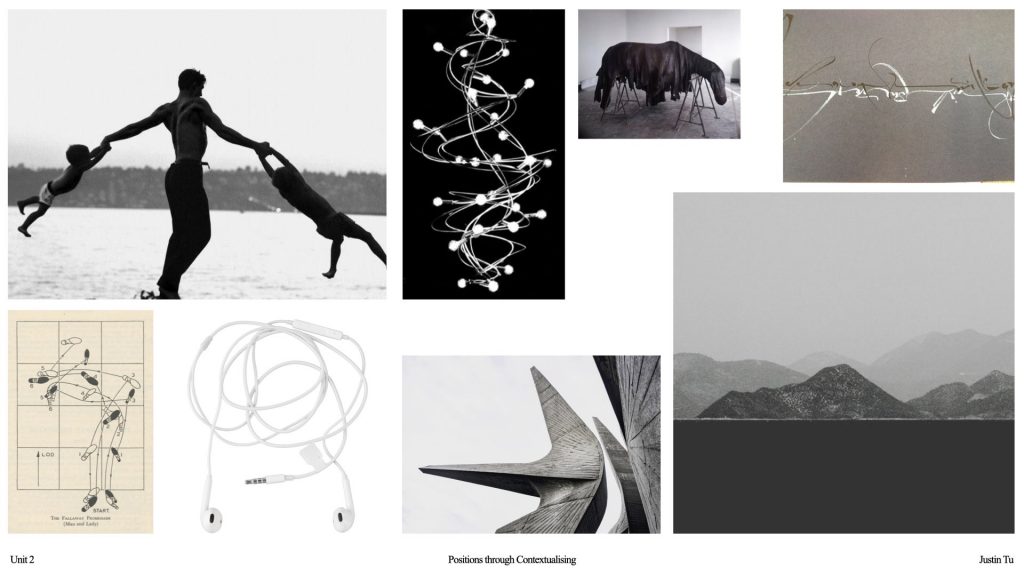
While assembling this collage, I drew on Batia Suter’s approach, focusing on formal resonance between the works. At the same time, there was an intuitive quality to the selection process—I found myself choosing images not only for their visual similarities, but also for an underlying urge to describe the father as a figure. There is a sense that it’s complicated and difficult to fully articulate.
[test02] Communicate in Imagery
The second approach is having conversations using only imagery, and then dissecting those exchanges by looking at how I interpret them, how the other person interprets them, and how an audience might understand them differently.
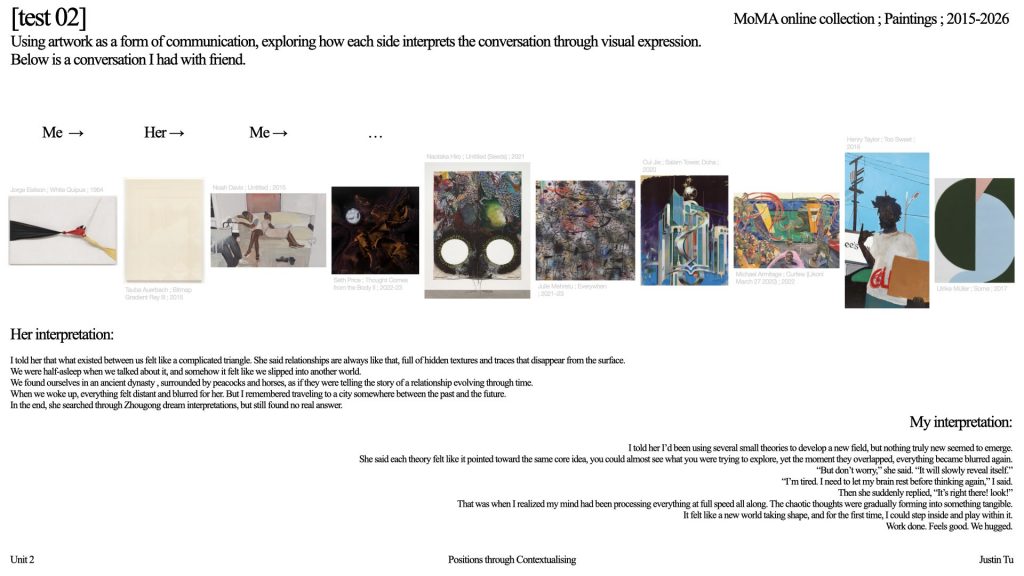
Week3:
For my final week, I decided to expand the theme of the father into a broader context, considering the role father figures play in shaping the upbringing of men in my generation. I think the father figure is an interesting and deeply complicated role, not only on a personal level, but also in the way it reflects wider ideas of masculinity and how these ideas influence identity.
In most cases, mothers have been the emotional center of the family: physically present, emotionally accessible. Fathers, on the other hand, have historically occupied a more distant position — the structural pillar of the home, but rarely its emotional center.
I think my generation’s fathers may be among the last to exist in that particular way. As gender roles shift and family structures evolve, fathers are no longer defined solely as providers. But what I want to document is the contradiction many children of that generation grew up with. It was often through our mothers that we learned what a man was supposed to be. She described him, interpreted him, handed us the blueprint. But my father, when I actually looked at him, never fully matched that image. My understanding of him was assembled from fragments — things I was told, brief encounters, gestures caught in passing.
We inherited an idea of manhood secondhand. That contradiction is what I want to revisit through this project.
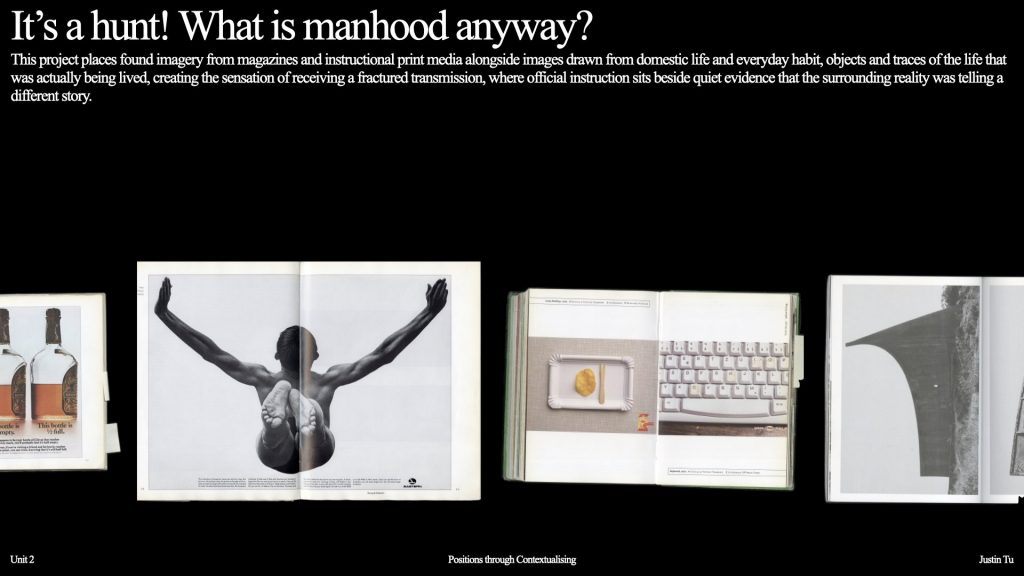
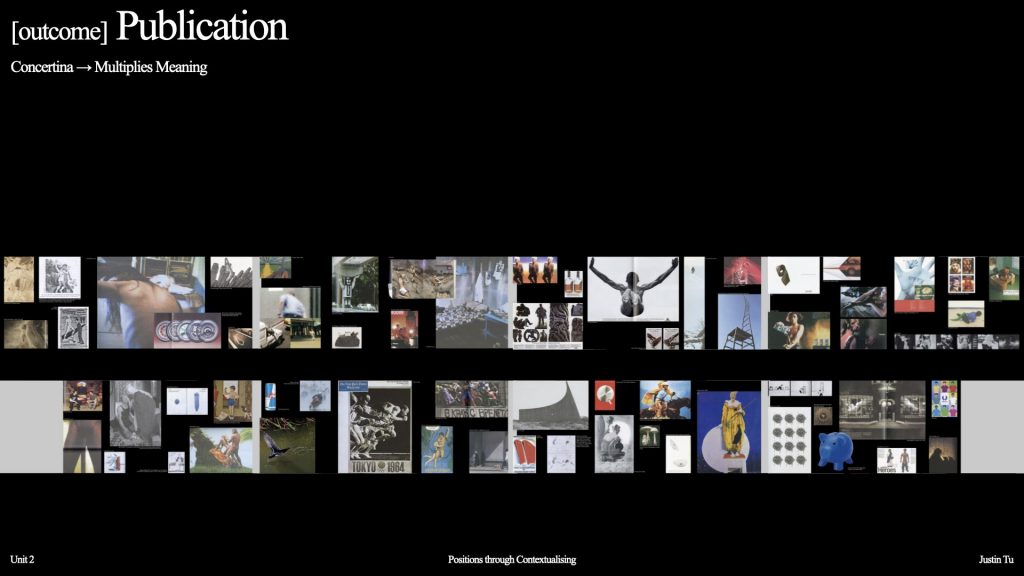
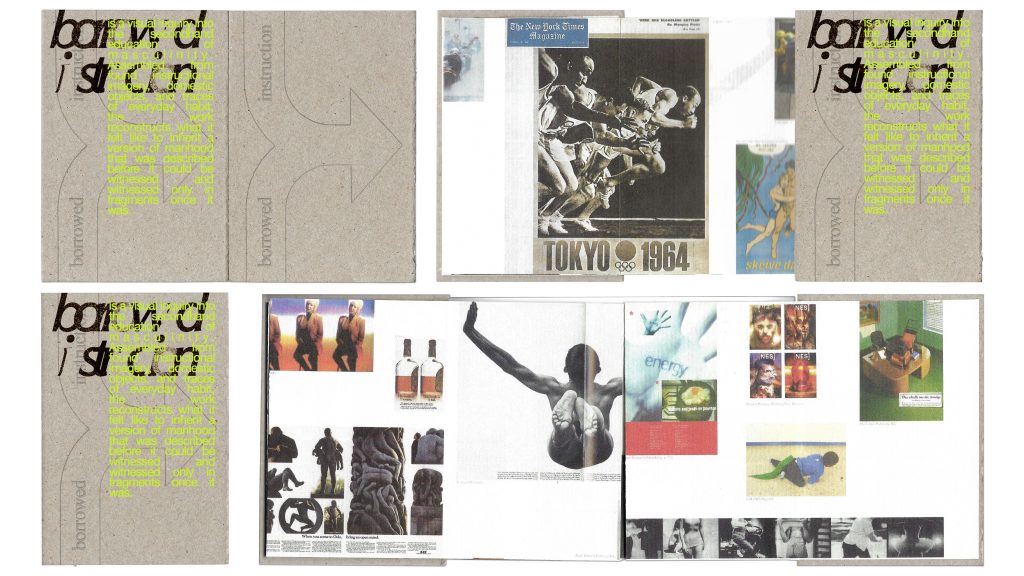
The project places found imagery from books, magazines and instructional print media alongside images drawn from domestic life and everyday habit, objects and traces of the life that was actually being lived, creating the sensation of receiving a fractured transmission, where official instruction sits beside quiet evidence that the surrounding reality was telling a different story.
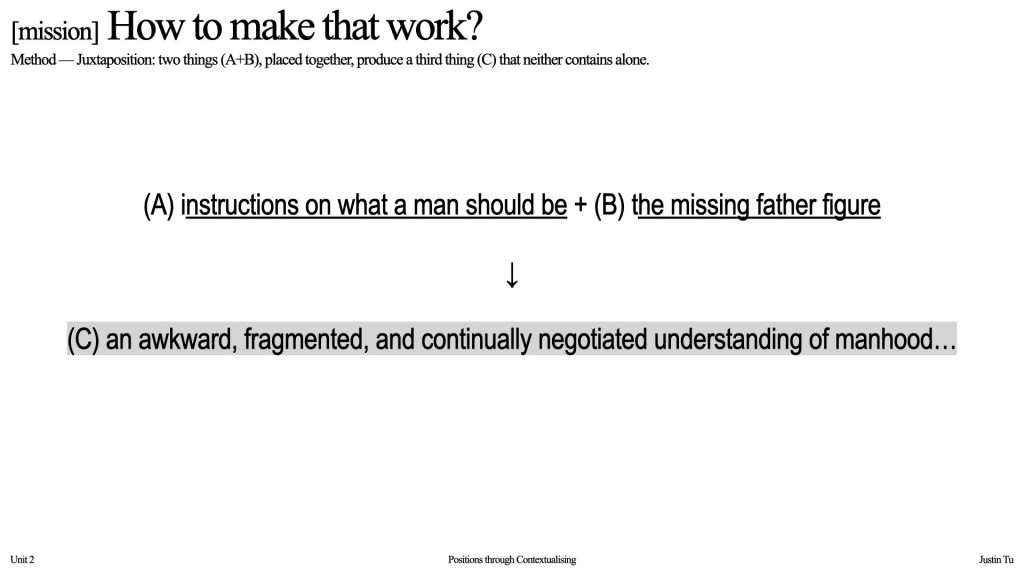
By using juxtaposition. Placing two ideas alongside one another to produce a third meaning that neither contains on its own.
In my case, the 2 ideas are: The instructions of what a man should be, communicated through my mother and through media representations; and, The absence of a father figure to reference, learn from, or measure oneself against (absence vs interpretation). What emerges from this tension is a third space: an awkward and the continually understanding of a manhood…
And that leads to my new enquiry:
Through juxtaposition making a visual field, I am trying to expose the instability of messaging and the ways we learn to navigate conflicting narratives. As seen in the publication, the imagery comes from a range of different sources, each carrying its own context and assumptions.
Leave a Reply