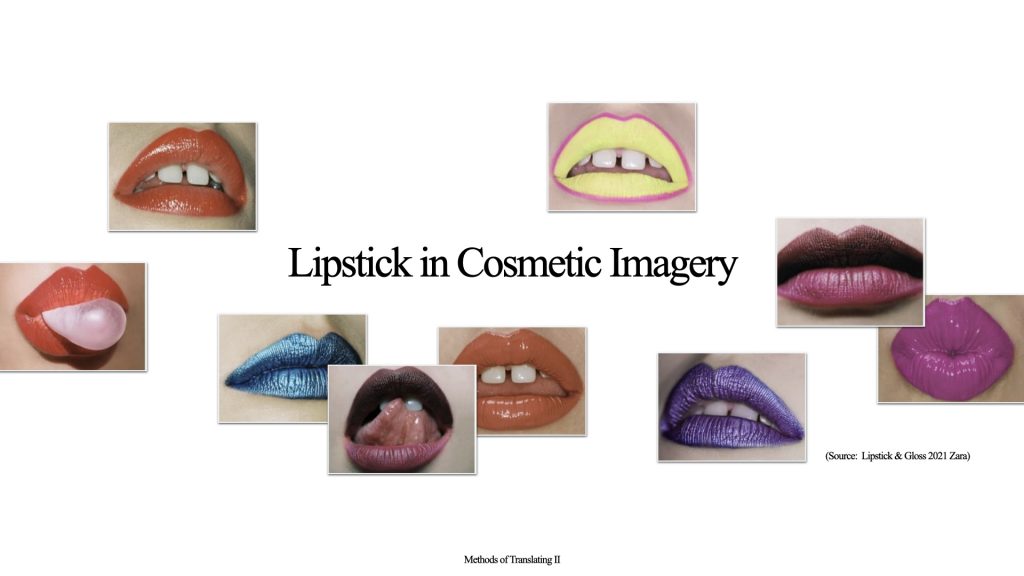
Something I found interesting is that there’s a research showing sex does not sell within the younger generation, but when we look at the advertisement now many of them are still selling sex. if it’s not working anymore, why are they still doing it?
The question led me to explore the imagery used in lipstick marketing, where visual strategies often rely on sexualized symbolism. So i begin to ask myself…
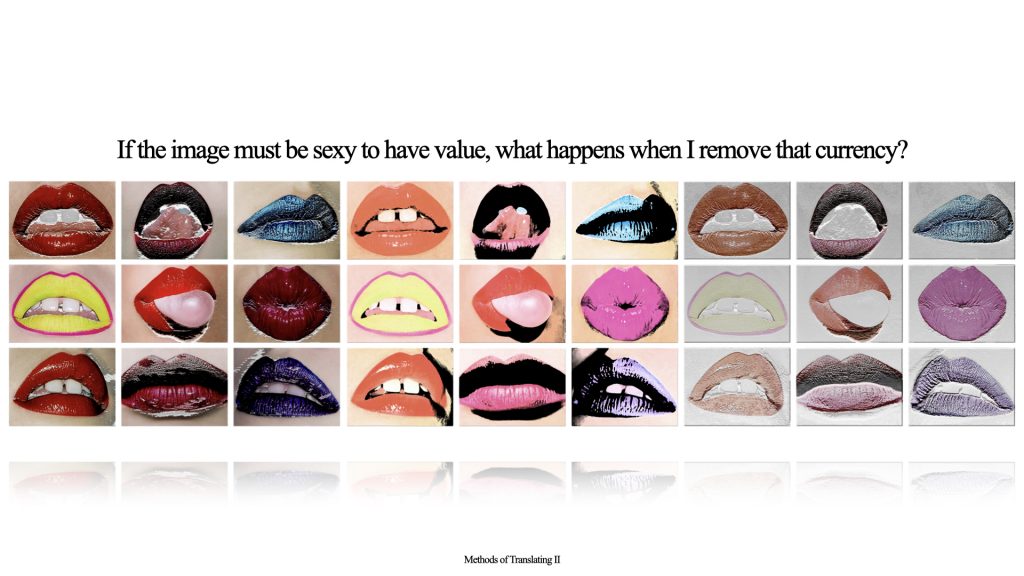
Maybe by doing that, I can expose the mechanisms of desire that culture has built around it.
Experimenting with Different Methods of Translation
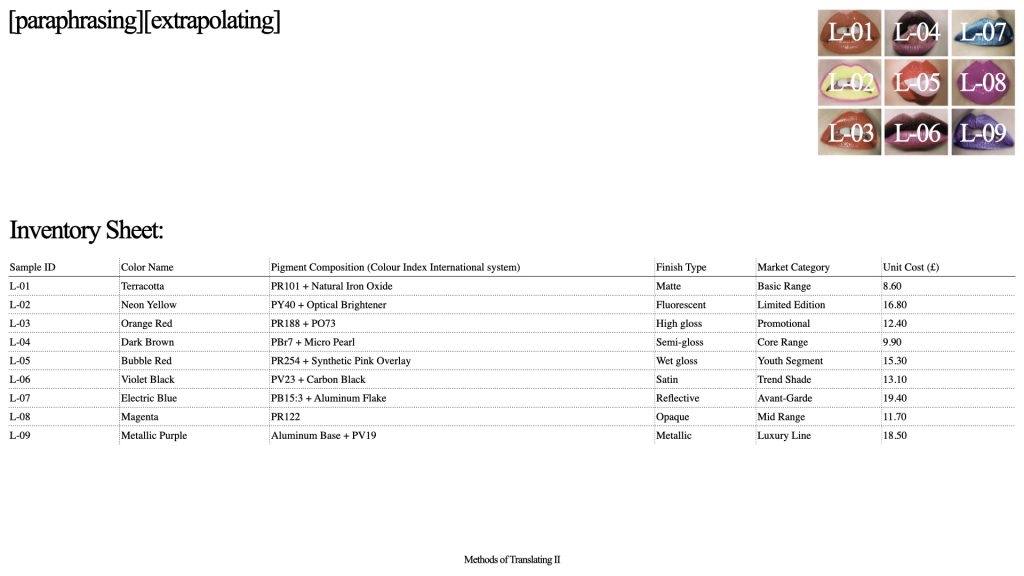
1. By paraphrasing and extrapolating, I translated an image into a database inventory sheet. With informations like IDs/ Colour names/ Pigment Compositions.…etc.
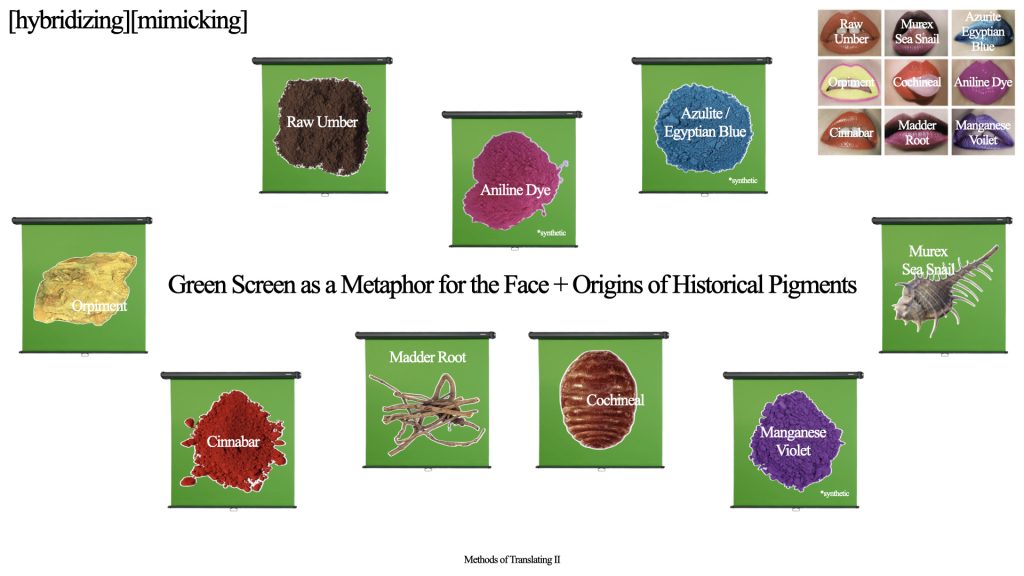
2.By hybridising and mimicking, I translated one image into another. Using metaphor to invite viewers to see the face as a site of endless projection and editing, and the colours as their material origins rather than seductive names, testing whether desire and perception are already pre-coded.
3.By relaying and improvising, I translated a visual image into sound.
These experiments allowed me to reimagine what it might look like when there’s nothing left for us to perceive in a sexual way.
Functional Substitutes: The Cosmetic Display Reimagined
Moving forward, I wanted to push this idea further. I created a functional display system to reimagine what it would look like if these lipstick images were replaced by scientific or neutral substitutes in real store settings.
I’m not sure how people would feel encountering this in a beauty shop. Personally, I’d think, oh, that’s cool, very scientific and professional. But at the same time, I might feel even more objectified.
There’s less fun, less spontaneity, less room for creativity or imagination. I feel like a chemical compound waiting to be experimented on…
When Sex is Stripped Away
Returning to the initial question: what remains when the sexual element is stripped away? Does it still have value? Do people still desire to colour their lips if it wasn’t about being seen, or performing for someone else’s gaze?
Pro Agency. Not Anti-Sex.
I know not everyone wants to be desired, but it’s also okay to want to be desired.
So, what should we expect from the future of cosmetic marketing? Can advertisements strike that sweet balance — creating something empowering, while resisting objectification? I think these are the questions we need to keep in mind when we think about what it means to sell beauty today.
Maybe instead of creating “anti-sex” commercials, we first need to understand this:
Sex does sell, but it should sell when the idea of agency is at its core.
Leave a Reply