The Afterlife of Council Housing: Penshurst
looking at the spaces left behind by policy and time
what happened to these homes?
Since October 3, 1980, the Right to Buy policy, introduced by Margaret Thatcher, has reshaped the UK’s housing landscape.
I wonder what happens to a home when ownership changes hands — from the state to the individual, from the tenant to the landlord, from the collective to the market?
The Afterlife of Council Housing: Penshurst begins with a simple question: What happened to these homes?
has the appearance of such communities shifted alongside the transformation of ownership structures?
Rather than seeking a definitive answer, I’m trying to observe the traces of transformation left in the build environment. Through quiet documentation and comparative research, it reflects on whether the “Right to Buy” policy reshaped not only London’s housing stock but also its social fabric, its sense of belonging, and its architectural language.
But what does that actually look like today?
Come walk with me for a bit, let’s take a look around the council housing and see what we can find.
so, i tried to see if the appearances matched the reality…
As I went through the documentation, I expected to find a clear visual divide — privately owned homes showing more signs of personalisation or renovation, and council-managed ones appearing more standardised or worn.
To test this assumption, I compared the visual categories with the ownership data through land and property information on HM Land Registry to see which homes are still council-managed and which are privately owned.

And I found out that Penshurst is still mostly council-owned.
The black blocks represent council-owned homes, while the other indicate privately owned ones. ( Council-owed:103 / Private-owned:27)

And if we look at it by terms… (click to reveal the data)

Clean.
Maybe clean doors suggest stability, or simply a tenant or owner who puts time into upkeep? (Out of 55 doors, ___ are private)
Out of 55, 11 are privately owned. But interestingly, at least half of those private ones aren’t what I’d call “clean.” So, maybe cleanliness isn’t about ownership at all. (11/55)

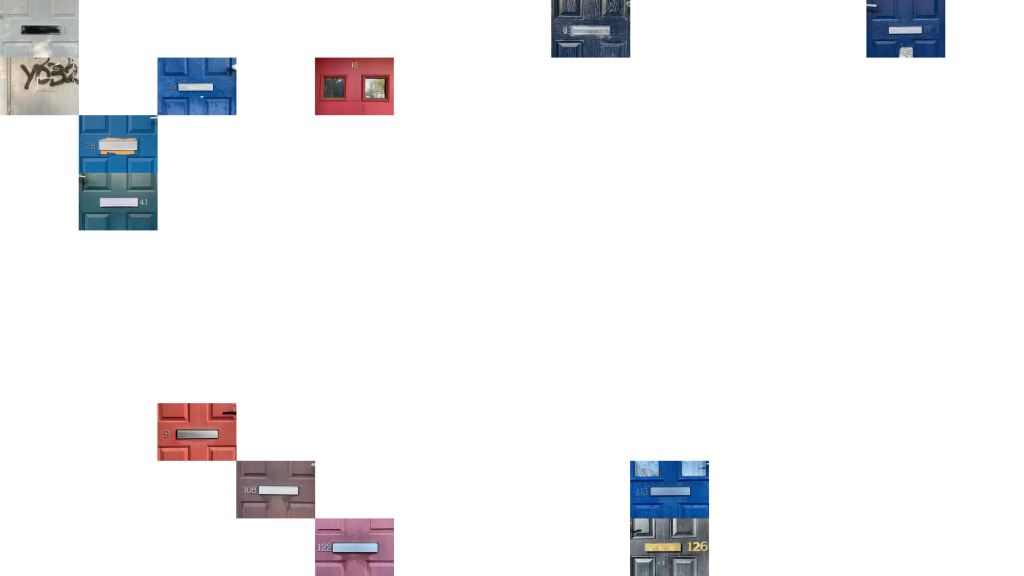
Worn.
Then there are the worn doors. Do they point to slow council repairs, or maybe a landlord who’s not so attentive? Or are they just old? (Out of 13 doors, ___ are private)
Surprisingly, none of the worn doors are privately owned. (0/13)

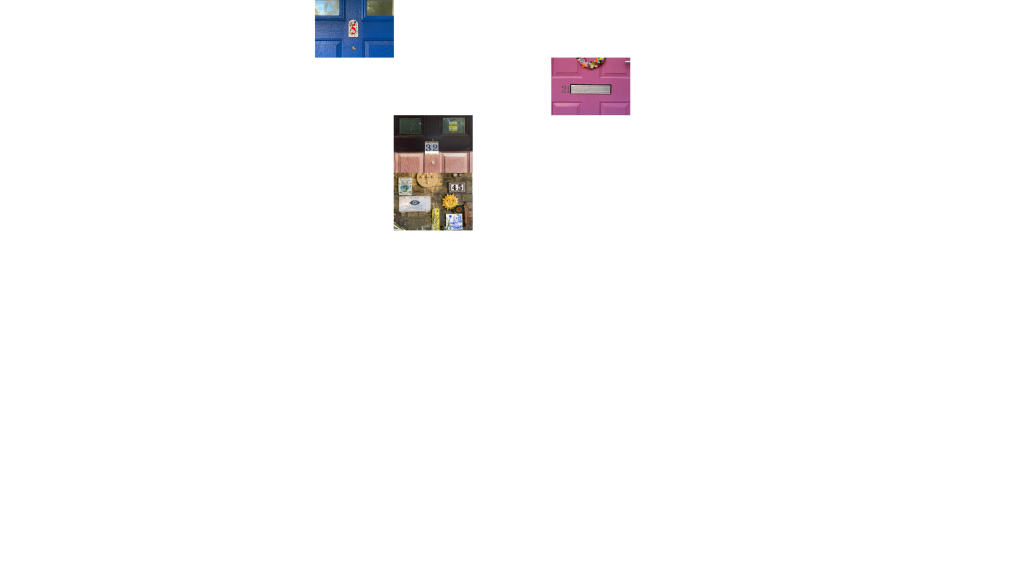
Decorated.
I thought decoration would show individuality — someone claiming the home as their own. (Out of 4 doors, ___ are private)
But, out of 4 decorated doors, none were privately owned. That surprised me. (0/4)


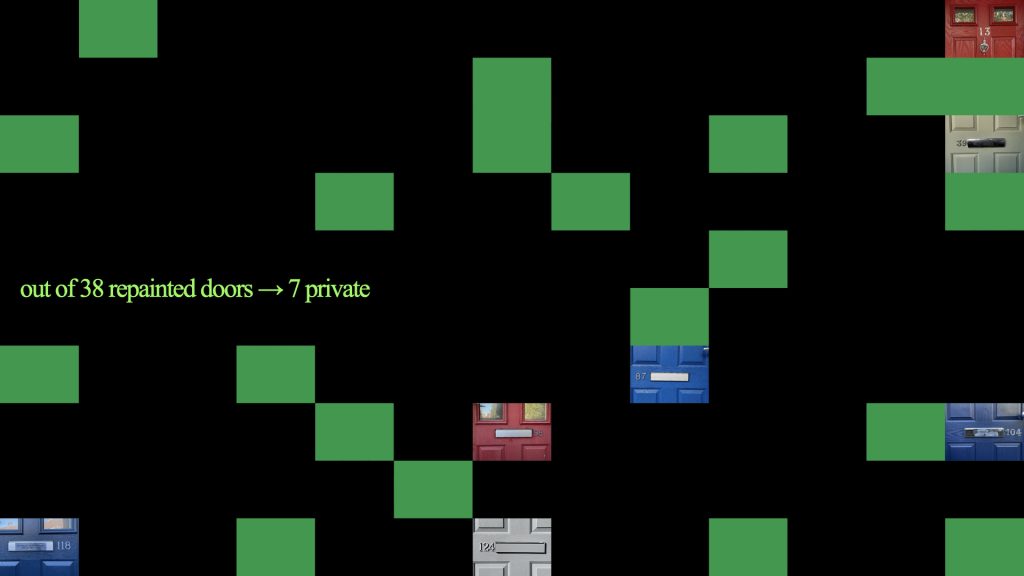
Repainted.
Fresh paint doors could mean care, or maybe just council maintenance. (Out of 38 doors, ___ are private)
Out of 38 repainted doors, 7 are private. So… maybe the council’s actually doing a decent job? (7/38)
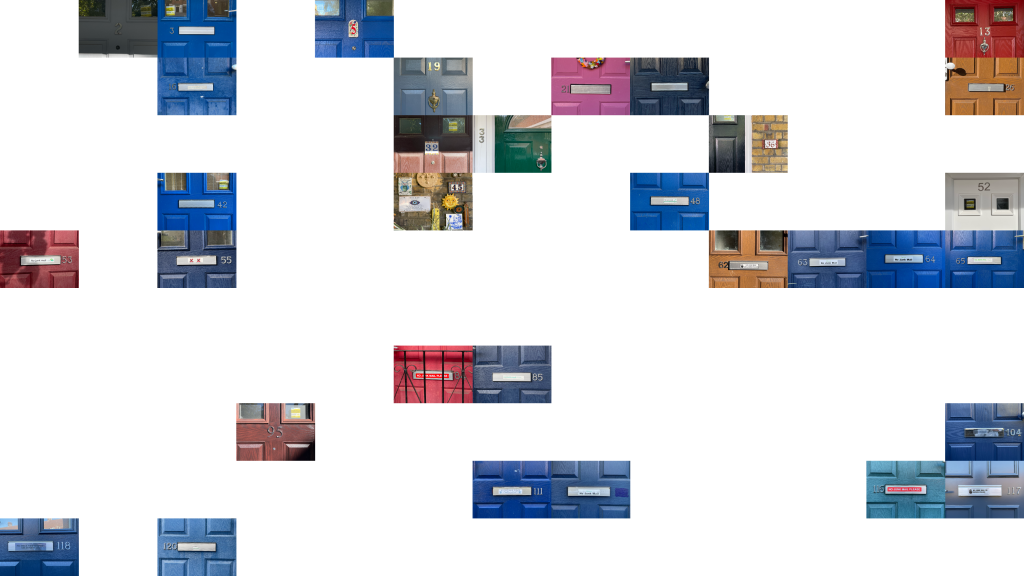
Personalised.
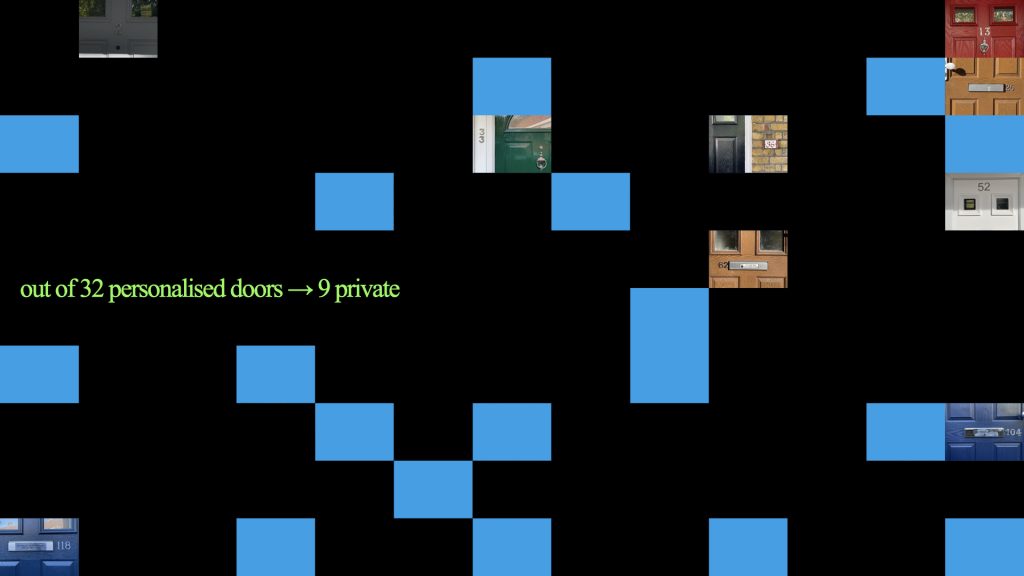
Some doors have small details like different knockers, stickers and personal touches. (Out of 32 doors, ___ are private)
Out of 32, 9 are private. It feels like everyone, regardless of ownership, wants to leave a mark in some way. (9/32)
Security-oriented.
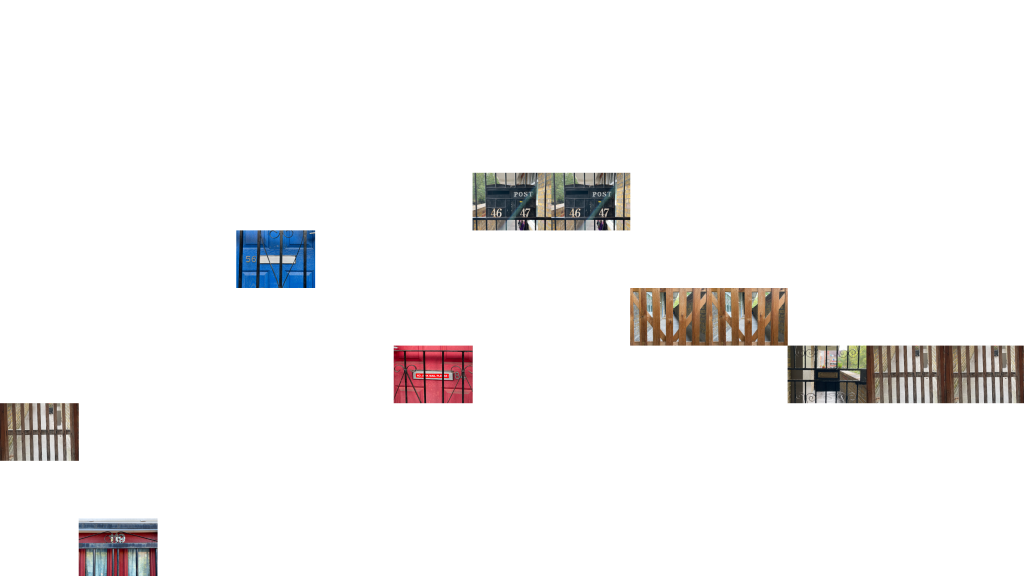
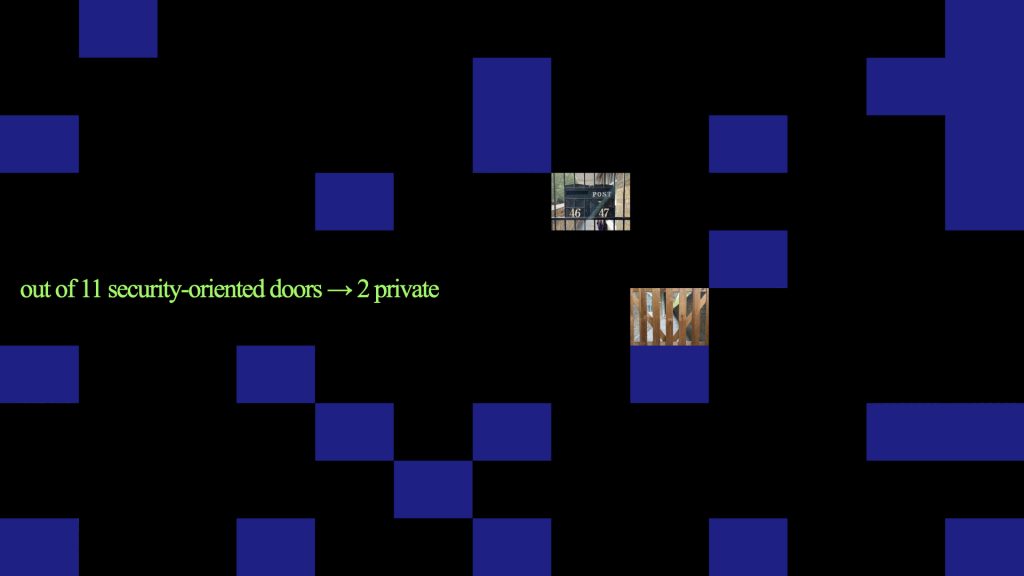
A few doors were heavy with locks, gates, or bars. Maybe that shows vulnerability, or maybe just caution? (Out of 11 doors, ___ are private)
Only 2 out of 11 were privately owned, still, it makes you wonder what people are protecting themselves from. (2/11)
Welcoming.
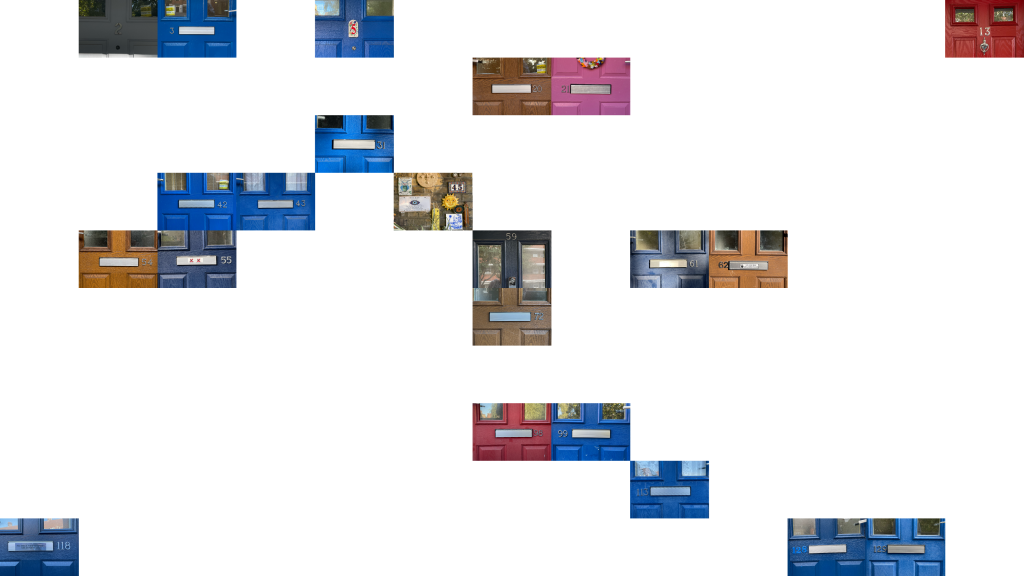
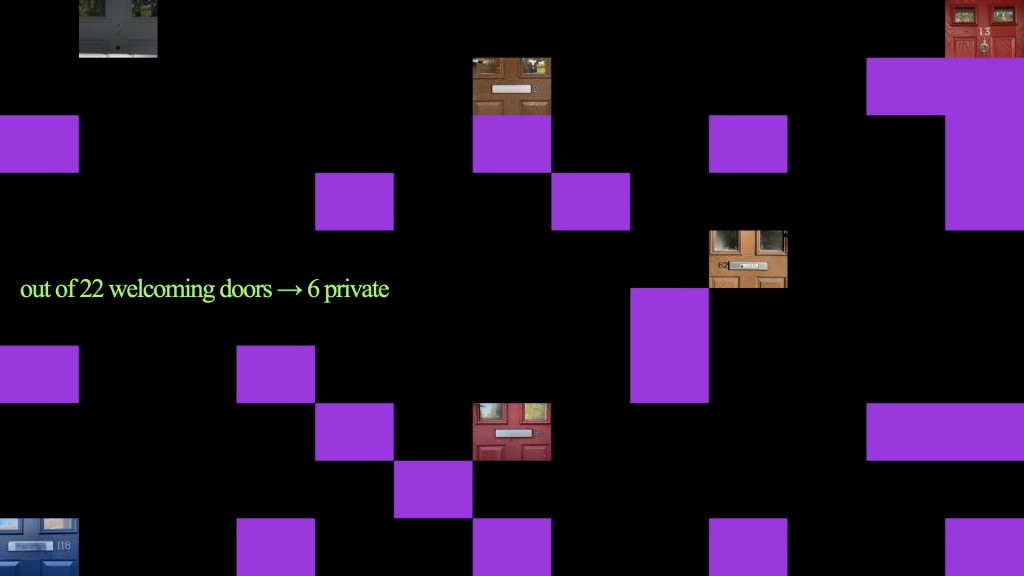
Some doors just felt… welcoming, little signs of life, does that suggest a sense of warmth in the communal relationships? (Out of 22 doors, ___ are private)
Out of 22, 6 are private. (6/22)

Standardised.
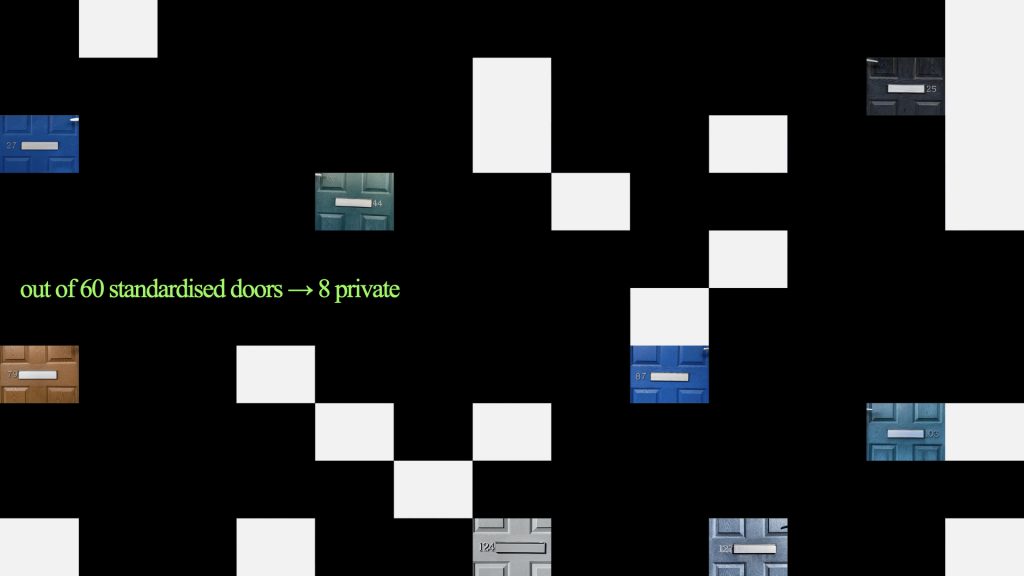
Does standardised doors show passivity, compliance, or simply indicate that the place is council-owned? (Out of 60 doors, ___ are private)
Out of 60, 8 are private. (8/60)
it turns out… the results weren’t what i expected.
I thought the privately owned homes might look more cared for, more individual. But the patterns don’t quite fit. Some of the most maintained, even welcoming doors, still belong to council tenants and some private ones show signs of age, neglect, or uncertainty.
Perhaps doors alone can’t tell the whole story but they do reveal quiet patterns of care, neglect, and adaptation that hint at something larger.
A policy once intended to empower disadvantaged groups and promote housing autonomy — has it, perhaps unintentionally, reshaped social hierarchies and created new forms of imbalance?
As some former tenants become landlords and others renters, how might these structural changes affect the relationships and collective identity within the community?
• this project does not propose judgment. it asks, instead, whether or not the residue of policy can be seen in paint layers, in ornaments, in doors that both separate and connect us.
Leave a Reply